The art, adventures, wit (or lack thereof), verse, ramblings, lyrics, stories, rants & raves of Christopher R. Bakunas
Eddie Arana, Rick Thibodeau, & Chris Bakunas San Diego, Ca. March 2012
Eddie Arana, Rick Thibodeau, & Chris Bakunas at Luche Libre Taco Shop in San Diego, March 2012
Thursday, August 15, 2013
The Unknown Innovators
There should be a special chapter in every history book devoted to unknown geniuses. By and large, most everything we use to make our lives easier or more enjoyable, has an origin that can be traced.
However, there are some everyday items, like glass for example, that most amazing of materials, that just showed up one day in ancient Mesopotamia, and/or spontaneously in China and other areas of the world, without a word written as to who made the discovery.
It staggers me to think no one thought to record who it was that discovered glass. In my mind, if someone were to walk up to me and present a transparent material that could hold the most corrosive liquids and yet be so fragile as to shatter when dropped from waist height, I would immediately pull out a chisel and carve into rock who that person was along with every single detail of the event.
"Dear Diary: Today, Argus of Sentha came to me with a magical bowl. I could see right through it! It was filled with water from the mother river, which by the way is filthy, and I could see the water through the vessel! It was a miracle!"
There are a number of important inventions, or developments, or discoveries, that have absolutely no attribution.
Some of that is attributive to the fact that written language had yet to develop, things such as the discovery of fire or how to determine if a particular sea creature was edible. But a lot of the common, ordinary things we use everyday that were put in use after written languages were developed, are of unknown origin.
Written language itself, for instance. If you came up with a method of recording spoken communications, wouldn't one of your first missives have been "Today, I Torrquag made symbols that directly relate to the sounds made when people grunt to each other."
Numbers share the same fate as language. Historians write that numbers originated with Mathematicians on the Indian sub-continent, but they cannot narrow it down to the one person who looked at his or her hands and started touching fingers for each goat in the herd. This person had to have walked up to someone else and said, "I touched all of my fingers on both hands 4 times, and then the first 3 fingers on my right hand, so that means I have 23 goats." That other person must have looked at his or her own hands, then the other persons goat herd, and said, "Whoa."
My top ten list of inventions/discoveries/developments/innovations that have no attribution:
1) Glass
2) The Level ( Supposedly, someone in Egypt came up with this, though there is still tons of contention).
3) The fork (Some people still do not understand that the fork was an improvement on the stick. Go to any Sushi joint and you will witness people still trying to pick up food with sticks. It's actually quite funny.)
4) The drum
5) Filtering Water (The first city on the planet known to have filtered water was Paisley, Scotland ( a suburb of Glasgow these days) - it boggles the mind that not one person in 1804 thought to write down who it was who came up with the idea and put it in operation).
6) The broom (I imagine this sprung from the brain of the first neat freak. Somebody who looked at the remains of a tribal get-together and said, "Man, there has got to be a way I can sweep all this up into a pile")
7) The hammer. This is one of the more universal inventions - it is used to build everything from homes to ships, artwork to shoes. Yet, the first person to use a hammer is unknown. How is that possible? I'm thinking that somewhere, probably in a cave, there is the inscription "My name is Yhang. Today I secured a rock to a stick, and it made a fantastic tool, or mighty weapon if you're one of those stay-in-the-trees freaks."
8) The hook. Somebody, somewhere, thought to create the hook. That made fishing quite a bit easier. Much, much easier.
9) The Chair ( Think about it. No matter where you are, the seat of your chair is 17 to 18 inches from the ground. And it allows you to eat, sip, work, or converse comfortably. Genius).
10) Ice Scraper. Those of you who live in southern climes will have no idea why this device is so highly rated, but the first time you walk out to your car after the 15th of October north of the Tropic of Cancer, you will grasp it's significance and send silent praise to the unknown genius who created the first one.
There Is No Time In Space
There Is No Time In Space, 7 & 1/2" X 10 & 3/4", Sharpie on paper, August 2013
My first exposure to what is known as Op Art was through the work of Jim Steranko. I was not aware of it until I was in my mid-twenties, but his covers for the late '60's run of Nick Fury Agent of S.H.I.E.L.D. featured homages to some of his personal favorite artists, such as Salvador Dali, Will Eisner, Edna Andrade, Reginald Neal, and Bridget Riley, all of whom were proponents of Op Art at one time or another.
The first Op Art painting I actually put my own eyeballs on was at a contemporary art show held at the San Diego Museum of Art sometime in the mid-'70's, when I was but a wee lad (I think I was 10).
The painting, which I only faintly recall, was of a pattern of black and white squares that seemed to undulate on the canvas. I was fascinated by the effect the piece had on my depth perception and the illusion of motion it possessed.
That was the earliest I can recall saying to myself "I can do that" while looking at artwork hanging in a gallery.
So I did, all the time, on my book covers, Pee-Chee folders, notebooks, etc.
I lost interest in Op Art by the time I graduated High School, but for whatever reason I seem to be creating a lot of Op Art doodles lately.
Kinda fun.
Tuesday, August 13, 2013
A Brief Excerpt From A Bit Of Historical Fiction I've Been Concocting
The large, somewhat rectangular hole in the wall was new. It must have been made this morning, for as best as Arthur could recall it hadn't been there last night. He stood in front of the hole for a few minutes, studying it like a forensic investigator. He ran the index finger of his right hand along the outer rim of the hole, trying to imagine just what it could have been that made the hole.
The hole was too large to have been made by any of the candlesticks or lamps in the room, and certainly could not of been made by a hammer. A hammer with a head the size of the hole would have kept going, as the momentum of the swing necessary to create the hole would have surely carried the hammer clear through the narrow strips of wood and plaster of the wall of the adjoining room like a rifle bullet through a watermelon.
Arthur reached into the hole. He felt around with his hand for the pieces of wood or chunks of plaster that had formerly been an integrated part of the wall, thinking they may be still attached by splinters or thin shards to the bottom lip of the hole, but there was nothing there. Whatever it was that had created the hole had torn the lath and plaster completely off and the pieces had no doubt fallen to the bottom of the inside of the wall.
Just as Arthur was turning away from his examination of the hole, his friend and house guest Adler Simms entered the room. "Ah, good afternoon Arthur, my apologies for having had to leave without a proper explanation in the early hours of the morning. Afraid I was in a bit of distress."
"Distress?" Queried Arthur as he looked at his old Army compatriot. "What could possibly have caused you distress?" As those words escaped his lips Arthur noticed the bandages wrapped about Adler's right hand.
"Last night, after we had finished with the billiards and bid goodnight to one another, I was overcome with a slight bit of insomnia. I retired here, the library, in the hopes that an hours perusal of Ainsworth or Zola would bring the sleep I craved. Unfortunately, an unwelcome visitor disturbed my attempt to self-induce sedation."
"A visitor? At that ungodly hour? Whom could it have been?" Arthur stammered out the words with a mystified glaze in his grey eyes. "Not whom," replied Adler, "but what. It was the largest, most obnoxious, and certainly the most irritatingly elusive mosquito I have ever encountered. Got the little bugger though."
Arthur looked at Adler's bandaged hand again, and then back at the hole. The missing piece to the puzzle fell right into place. "I'll have to get Graham in here to tidy things up. Dreadfully sorry about the inconvenience. Though I would be remiss to point out that swatters are kept near all of the windows."
"Right, noticed them just after I made the choice to silence the intruder with my fist. May have been the effects of the Brandy."
Adler smiled as he said this and both men laughed at the allusion to the night in Paris 14 years ago that saw them both fleeing the Prussian forces of Wilhelm I in the company of three young parlour maids and a wagon laden with casks of the finest brandy in all of France.
Monday, August 12, 2013
The Best Things Said That No One Ever Hears
East Dorset, Vermont 1994
We all say things we really, truly mean
Under our breath
We all shout out for release at the top of our lungs
In locked, windowless rooms
The freedom
That comes
From letting go
When you are certain
No one will ever know
Being bold is easy on the stage in a theater
Filled with empty seats
Long conversations that succinctly make the point
Carried on with a mirror
Being Clever
Debonair, graceful
Effortlessly articulating
Seems to always be possible
When no one else is looking
We all say things we really, truly mean
Under our breath
We all shout out for release at the top of our lungs
In locked, windowless rooms
The freedom
That comes
From letting go
When you are certain
No one will ever know
Being bold is easy on the stage in a theater
Filled with empty seats
Long conversations that succinctly make the point
Carried on with a mirror
Being Clever
Debonair, graceful
Effortlessly articulating
Seems to always be possible
When no one else is looking
Sunday, August 11, 2013
She Said Her Smile Was The Result Of A Lifetime Of Living
World-weary woman grown tired of the ways
No longer seeks to distract herself
From the truth of the world around her
Sits in her favorite chair without longing for the days
Displayed in the faded photos on the shelf
Doesn't waste time wishing for life as it were
Twirls strands of hair marveling at the grays
Counts them all as if calculating her wealth
Makes her feel like a millionaire
Friday, August 9, 2013
All You Ever Think About Is Sex, Part II
All You Ever Think About Is Sex, Part II, 3" X 10 & 3/4", Sharpie accent highlighter on paper, August 2013
Thursday, August 8, 2013
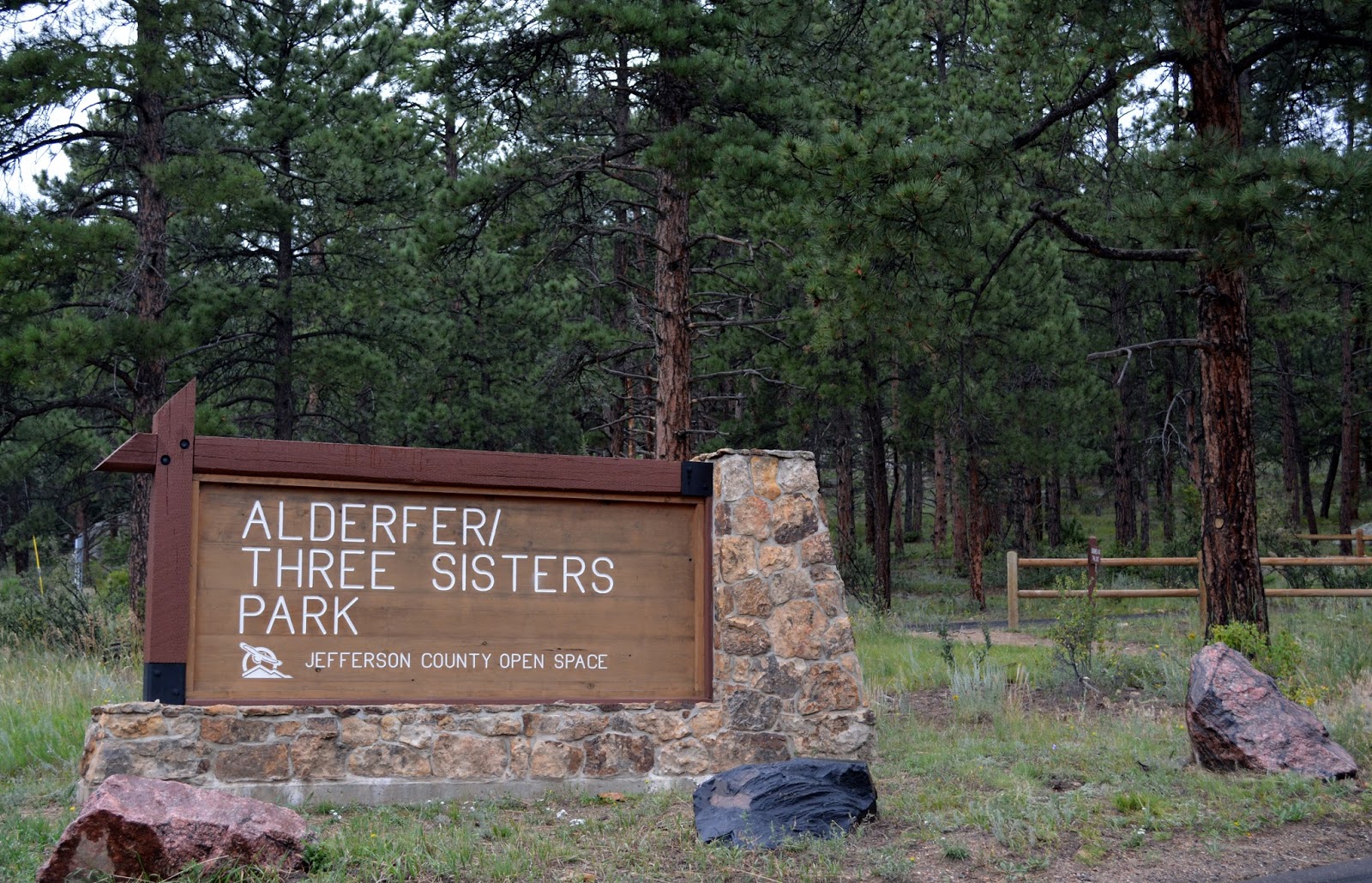
Hikin' Alderfer/Three Sisters Park Up In Evergreen
Alderfer/Three Sisters park is located in the heart of Evergreen
Just north of C-470 up Colorado Highway 74, and a little ways along Colorado Highway 73 to Buffalo Park Road, is a pleasant little park that boast 13.9 miles of hiking/jogging/mountain biking trails with a few unique geological features, historical homesteads, and quite a bit of Colorado flora and fauna thrown in to make the visit an interesting adventure.
The drive from my home in Lakewood was approximately 3/4's of an hour, and that includes stoplights and slow traffic. It's a beautiful drive up 74 through Morrison, Idledale, and Kittridge btw, especially in the morning when the sun is pouring into the canyon.
The park is just under 800 acres, and while it is known primarily for the Three Sisters and The Brother rock formations, it also has a trail that winds it's way up to the 8,536 foot summit of Evergreen Mountain.
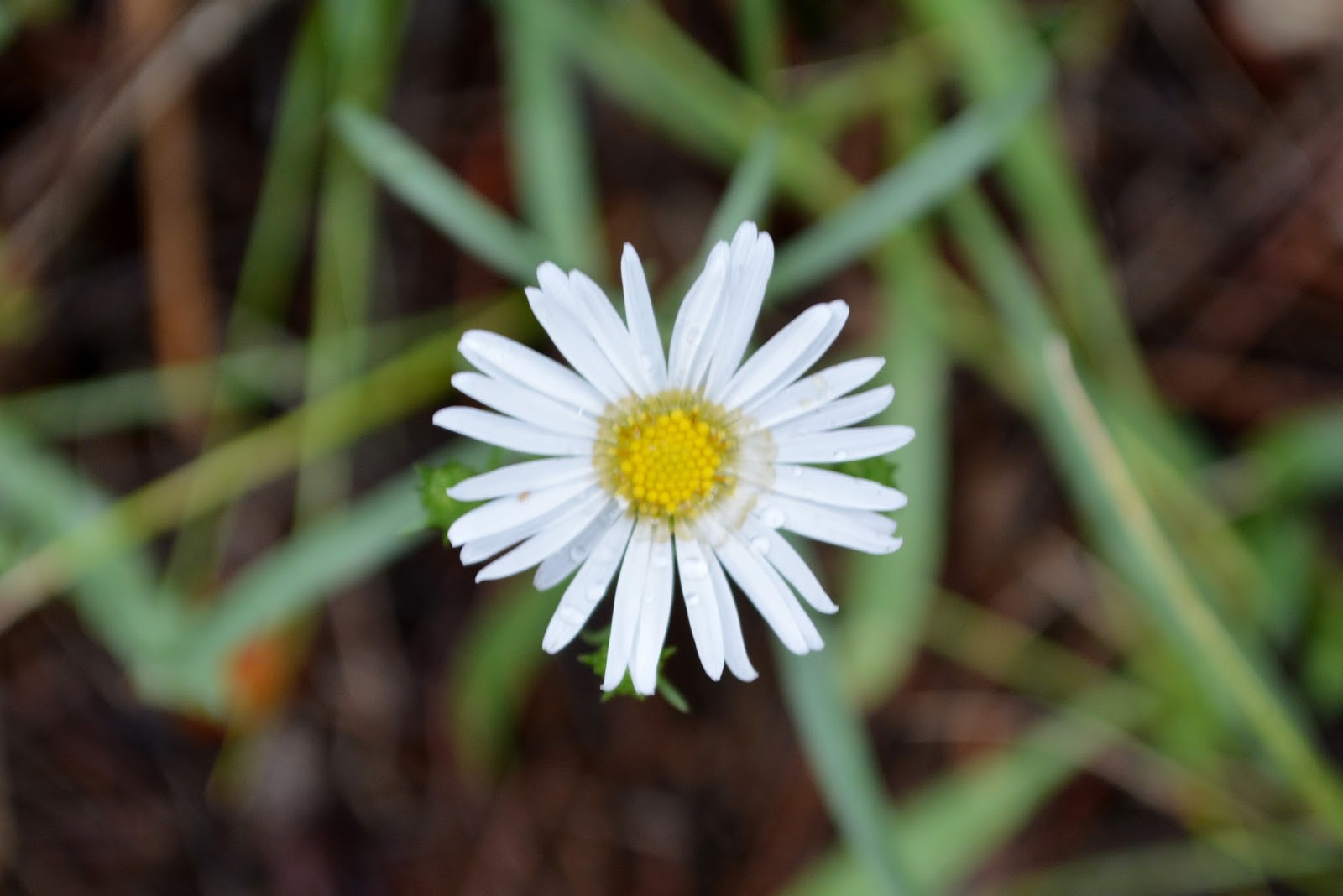
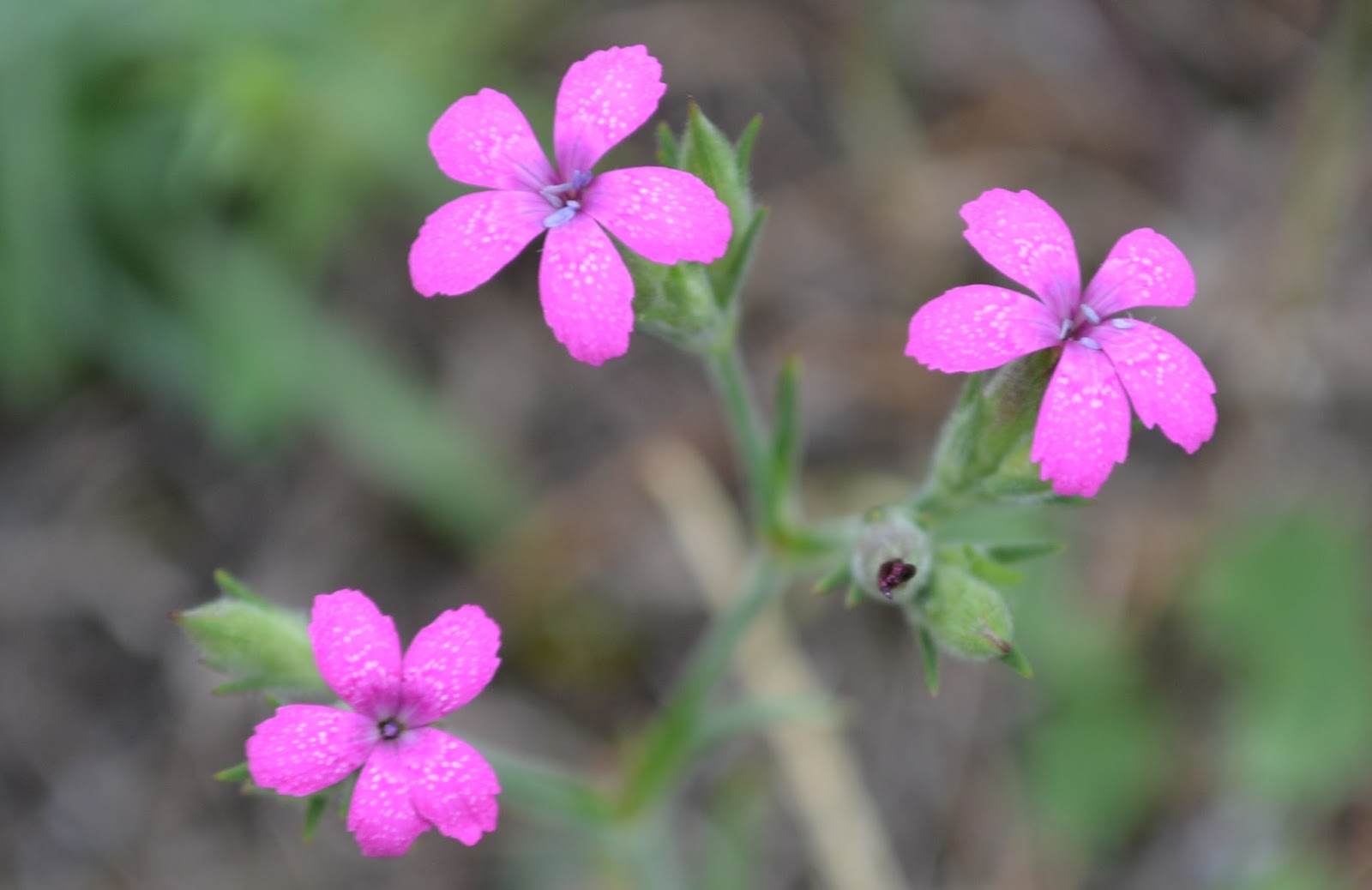
Wildflowers line the trail like a colorful honor guard
Midsummer means almost daily rain in the mountains and foothills around Denver, so it is wise to bring along a jacket or poncho in case the clouds decide to burst as you hike. While this park is not as isolated or as wild as a lot of the parks in Colorado are, the elements are still a factor and should never be ignored.
Crazy twisty curvy tree, an inspiration to straw manufacturers everywhere
The Three Sisters are on somewhat of a northern slope and as such it can get a little chilly, even in the afternoon of a warm sunny day. Fortunately, I prepared well in advance by developing several layers of subcutaneous fat to keep me warm, all polar bear like.
How many deer can you see?
Walking along the Hidden Fawn Trail and staring off into the forest it eventually becomes apparent how the trail got it's name - there are a lot of deer hidden in there. The deer are docile, almost tame, which comes I suppose from not having to deal with the treat of hunters in the little sanctuary.
Toadstool or mushroom? You go first
The rains not only bring out the wildflowers, but a wide variety of fungus as well. The mushrooms grow fairly large and colorful, which may or may not be a good thing. Magic or not, mushrooms have very limited appeal to me.
A carefully stacked cairn along the trail
Cairn building is becoming a thing in Colorado. In the past two months, and over a few hundred miles of trail, I must have passed a few hundred of these, some are very simple little stacks of flat rocks, and some are very involved structures that look like small Japanese temples.
The happiest rock in the history of the Earth
The trail makes it's way past, over, and through a lot of rock formations, most of which have been well-worn by millions of years of exposure to the elements. The Rocky Mountains offer an excellent shortcourse in geology.
The trail up to the Three Sisters gets a little narrow
Once off the Hidden Fawn Trail and on The Sisters Trail it is only 15 minutes to the Three Sisters and The Brother. The trail is a fairly easy switchback with only a 250 or so foot elevation gain from the parking lot.
The Three Sisters as seen from the top of The Brother
At the base of Three Sisters the temptation to clamber over the rocks is nearly overwhelming. It's as if there is some innate desire to see the view from the top. Fortunately, finding a route up is easy, and hand/foot holds are very evident (and stable).
Scrambling up any of the Three Sisters or The Brother is not too difficult (no gear is allowed, so it's all hands and feet). I made it up The Brother to get a photo of the Three Sisters in about 15 minutes, and trust me you, I am no rock climber.
Looking north from the top of The Brother
The views are excellent, though there are a few larger trees that poke up and obstruct here and there.
The Colorado monsoon season brings out the fungus
I opted to follow the Bearberry Trail once I left the Three Sisters. The path is wide and an easy walk down to where it meets up with the Mountain Muhly Trail.
These guys are everywhere!
The Mountain Muhly Trail, as the name implies, winds around Muhly Mountain. At 7600 feet, it's more of a hill by Rocky Mountain standards than a mountain, but it does meander past an interesting old barn and adjacent cabin (now boarded up tight), and there is plenty of beautiful scenery to take in.
An old boarded up cabin along the Mountain Muhly Trail
There is no signage other than "Keep Out" posted on or near any of the buildings that are along the Mountain Muhly Trail. The large cabin that is just past the barn looks at least 60 or 70 years old, with electrical service apparently added sometime after the cabin was built. It's a great old structure, and if it starts raining there is plenty of room under two separate porches to find shelter.
Windblown trees line Mt Muhly Trail
The trail continues beyond the old cabin as a narrower, single track, though one that is still relatively easy to hike. The path quickly tops the mountain and the descent is along the west slope.
They are following me...I know they are
The forest the trail cuts through is full of the sounds made by wildlife - chattering squirrels and chirping, cawing birds. Every so often the rustle of branches can be heard as well, the sound of the large mule deer making their way through the trees.
Mule deer sightings are common, and are generally a good thing, as it indicates that mountain lions and bears are probably not around.
Trails don't get better than this
The Mountain Muhly Trail was at one time a service road (for access to the old cabin, I imagine) and is still well maintained. Hiking along this trail, even at altitude, is as easy as walking along the sidewalk in front of my house.
Turn the corner of the Bearberry Trail and you see the old Alderfer ranch and homestead
The Alderfer homestead was originally settled in the mid-1890's by George Dollison, and became the home of E.J. and Arleta Alderfer on Christmas Eve of 1945. The Alderfer family lived and worked on the property, expanding it to include a working cattle ranch, until the mid-seventies when Jefferson County Open Space began acquiring the property.
Lava plumes from millions of years ago have been weathered smooth
Excellent view of the Three Sisters and brother from the Silver Fox Trail.
The best view of the Three Sisters and The Brother are from the Silver Fox Trail where it meets the Ponderosa Trail. The trail junction is only 1000 feet of level, well groomed trail from the Le Masters Road parking lot near the Alderfer homestead.
Alunatic Mountain Biker blazes the trail to the Alderfer homestead
The Mountain Muhly Trail eventually meets the Bluebird Meadow Trail, which leads to the Alderfer homestead and ranch along Buffalo Park Road next to the Le Masters Road parking lot.
There is a large herd of deer that makes it's home in the park, and in the area in front of the Alderfer homestead.
They are mule deer that have been adopted by the people of Evergreen, and have become almost tame.
Felled Lodgepole pine trees litter the forest floor
Hiking along the Evergreen Mountain West Trail the evidence of a Forest Management Project can be seen strewn all over the mountain. There is a large sign along the trail that explains that the Lodgepole Pine Forest has been thinned to increase habitat and vegetation diversity and to reduce the wildfire hazard.
What I don't understand though is, if the intent was to lesson the danger of a wildfire, why leave all the very dry, very flammable dead trees scattered throughout the forest? I mean, isn't that just a loose stack of firewood?
Mount Evans and Mount Bierstadt are to the far right of the picture
The view from the summit of Evergreen Mountain, while not quite what it was from last week's trek up Mount Bierstadt, is still pretty impressive. The front range of the Rockies sprawls out for hundreds of miles, and the small city of Evergreen looks like a child's playset left out in the backyard.
I can see into the backyards of some very wealthy people's homes from here
Trees grow out of the granite...obligatory nature finds a way quote
The crest of Evergreen Mountain is still below the tree line, but being as how the mountain is composed primarily of granite, the trees have to work to find soil. It amazes and impresses me to see trees growing straight through solid rock.
Weather-twisted tree trunks abound
Being exposed to the elements at the top of a mountain also means the trees are under constant assault by those same elements. The wind and the rain combine to contort the trees as they grow, and everywhere toppled trees that look like rung out dish towels are scattered on the ground.
View to the southeast from the summit of Evergreen Mountain
The area surrounding Evergreen Mountain features many natural and manmade meadows. The manmade meadows are the result of pastures created for the grazing of cattle and horses. There are still working ranches in the area, though not too many run cattle - mostly just recreational horse boarding nowadays.
The evidence of the lava flows that formed the foundation of Rocky Mountains is everywhere
The Evergreen Mountain East Trail makes it's way down the peak with a few switchbacks and a number of long sections of wide path that pass strands of Quaking Aspen and thinned out Lodgepole Pine forest. From the short Summit Trail to the parking lot is close to two miles, but it's as gentle a downhill two miles as one could hope for.
Just north of C-470 up Colorado Highway 74, and a little ways along Colorado Highway 73 to Buffalo Park Road, is a pleasant little park that boast 13.9 miles of hiking/jogging/mountain biking trails with a few unique geological features, historical homesteads, and quite a bit of Colorado flora and fauna thrown in to make the visit an interesting adventure.
The drive from my home in Lakewood was approximately 3/4's of an hour, and that includes stoplights and slow traffic. It's a beautiful drive up 74 through Morrison, Idledale, and Kittridge btw, especially in the morning when the sun is pouring into the canyon.
The Hidden Fawn trail is basically a dirt sidewalk
Alderfer/Three Sisters is Jefferson County Open Space, and was acquired through donations of land from the Alderfer family and the Spencer Wyatt family, as well as purchases made from the aforementioned, from 1977 through 1986. Additional acreage was purchased from the State Land Board in 2002.
The park is just under 800 acres, and while it is known primarily for the Three Sisters and The Brother rock formations, it also has a trail that winds it's way up to the 8,536 foot summit of Evergreen Mountain.
Wildflowers line the trail like a colorful honor guard
Midsummer means almost daily rain in the mountains and foothills around Denver, so it is wise to bring along a jacket or poncho in case the clouds decide to burst as you hike. While this park is not as isolated or as wild as a lot of the parks in Colorado are, the elements are still a factor and should never be ignored.
Crazy twisty curvy tree, an inspiration to straw manufacturers everywhere
The Three Sisters are on somewhat of a northern slope and as such it can get a little chilly, even in the afternoon of a warm sunny day. Fortunately, I prepared well in advance by developing several layers of subcutaneous fat to keep me warm, all polar bear like.
How many deer can you see?
Walking along the Hidden Fawn Trail and staring off into the forest it eventually becomes apparent how the trail got it's name - there are a lot of deer hidden in there. The deer are docile, almost tame, which comes I suppose from not having to deal with the treat of hunters in the little sanctuary.
Toadstool or mushroom? You go first
The rains not only bring out the wildflowers, but a wide variety of fungus as well. The mushrooms grow fairly large and colorful, which may or may not be a good thing. Magic or not, mushrooms have very limited appeal to me.
A carefully stacked cairn along the trail
Cairn building is becoming a thing in Colorado. In the past two months, and over a few hundred miles of trail, I must have passed a few hundred of these, some are very simple little stacks of flat rocks, and some are very involved structures that look like small Japanese temples.
The happiest rock in the history of the Earth
The trail makes it's way past, over, and through a lot of rock formations, most of which have been well-worn by millions of years of exposure to the elements. The Rocky Mountains offer an excellent shortcourse in geology.
The trail up to the Three Sisters gets a little narrow
Once off the Hidden Fawn Trail and on The Sisters Trail it is only 15 minutes to the Three Sisters and The Brother. The trail is a fairly easy switchback with only a 250 or so foot elevation gain from the parking lot.
The Three Sisters as seen from the top of The Brother
At the base of Three Sisters the temptation to clamber over the rocks is nearly overwhelming. It's as if there is some innate desire to see the view from the top. Fortunately, finding a route up is easy, and hand/foot holds are very evident (and stable).
Scrambling up any of the Three Sisters or The Brother is not too difficult (no gear is allowed, so it's all hands and feet). I made it up The Brother to get a photo of the Three Sisters in about 15 minutes, and trust me you, I am no rock climber.
Looking north from the top of The Brother
The views are excellent, though there are a few larger trees that poke up and obstruct here and there.
The Colorado monsoon season brings out the fungus
I opted to follow the Bearberry Trail once I left the Three Sisters. The path is wide and an easy walk down to where it meets up with the Mountain Muhly Trail.
These guys are everywhere!
The Mountain Muhly Trail, as the name implies, winds around Muhly Mountain. At 7600 feet, it's more of a hill by Rocky Mountain standards than a mountain, but it does meander past an interesting old barn and adjacent cabin (now boarded up tight), and there is plenty of beautiful scenery to take in.
An old boarded up cabin along the Mountain Muhly Trail
There is no signage other than "Keep Out" posted on or near any of the buildings that are along the Mountain Muhly Trail. The large cabin that is just past the barn looks at least 60 or 70 years old, with electrical service apparently added sometime after the cabin was built. It's a great old structure, and if it starts raining there is plenty of room under two separate porches to find shelter.
Windblown trees line Mt Muhly Trail
The trail continues beyond the old cabin as a narrower, single track, though one that is still relatively easy to hike. The path quickly tops the mountain and the descent is along the west slope.
The trail down has seen a bit of rain recently
From where the Bearberry Trail met the Mountain Muhly Trail to the top of the mountain took thirty minutes, and that includes time spent exploring the area around the old cabin. This hike, while at a slightly higher altitude than Lair O' The Bear and Pence Park, was proving to be far easier than that much shorter hike.
View of the Three Sisters (and brother) from Mt.Muhly Trail
Muhly is somewhat northwest of the Three Sisters, and offers a nice view of the formations on the other side of the valley as you hike along the trail.
The midsummer rains have brought out the wildflowers
The forest the trail cuts through is full of the sounds made by wildlife - chattering squirrels and chirping, cawing birds. Every so often the rustle of branches can be heard as well, the sound of the large mule deer making their way through the trees.
Mule deer sightings are common, and are generally a good thing, as it indicates that mountain lions and bears are probably not around.
Trails don't get better than this
The Mountain Muhly Trail was at one time a service road (for access to the old cabin, I imagine) and is still well maintained. Hiking along this trail, even at altitude, is as easy as walking along the sidewalk in front of my house.
Turn the corner of the Bearberry Trail and you see the old Alderfer ranch and homestead
The Alderfer homestead was originally settled in the mid-1890's by George Dollison, and became the home of E.J. and Arleta Alderfer on Christmas Eve of 1945. The Alderfer family lived and worked on the property, expanding it to include a working cattle ranch, until the mid-seventies when Jefferson County Open Space began acquiring the property.
Lava plumes from millions of years ago have been weathered smooth
Excellent view of the Three Sisters and brother from the Silver Fox Trail.
The best view of the Three Sisters and The Brother are from the Silver Fox Trail where it meets the Ponderosa Trail. The trail junction is only 1000 feet of level, well groomed trail from the Le Masters Road parking lot near the Alderfer homestead.
The color variations in the wildflowers are incredible
This particular portion of the trail features views of wildflower-covered mountain meadows, and there are even a number of benches available for anyone who desires to sit awhile and enjoy the cool mountain air.
A
The Mountain Muhly Trail eventually meets the Bluebird Meadow Trail, which leads to the Alderfer homestead and ranch along Buffalo Park Road next to the Le Masters Road parking lot.
There is a large herd of deer that makes it's home in the park, and in the area in front of the Alderfer homestead.
They are mule deer that have been adopted by the people of Evergreen, and have become almost tame.
The deer gangs of Evergreen
Crossing Buffalo Park Road to the south section of the park the first trail encountered is a nearly level half-mile trail named Wild Iris Loop. It encircles a meadow that is generally filled with wild irises and other wildflowers, hence the clever name.
At nearly the southern apex of this trail is the junction with the Evergreen Mountain West Trail, which leads to the summit of Evergreen Mountain.
The Evergreen Mountain West Trail
The trail is not too steep, but it is an ascent. The elevation gain is about 600 feet, and the trail is very popular with lunatics Mountain Bikers. It being a single track trail though I had to quickly step to the side to allow a careening Biker to blaze on past on a couple of occassions.
Hiking along the Evergreen Mountain West Trail the evidence of a Forest Management Project can be seen strewn all over the mountain. There is a large sign along the trail that explains that the Lodgepole Pine Forest has been thinned to increase habitat and vegetation diversity and to reduce the wildfire hazard.
What I don't understand though is, if the intent was to lesson the danger of a wildfire, why leave all the very dry, very flammable dead trees scattered throughout the forest? I mean, isn't that just a loose stack of firewood?
Mount Evans and Mount Bierstadt are to the far right of the picture
The view from the summit of Evergreen Mountain, while not quite what it was from last week's trek up Mount Bierstadt, is still pretty impressive. The front range of the Rockies sprawls out for hundreds of miles, and the small city of Evergreen looks like a child's playset left out in the backyard.
I can see into the backyards of some very wealthy people's homes from here
Trees grow out of the granite...obligatory nature finds a way quote
The crest of Evergreen Mountain is still below the tree line, but being as how the mountain is composed primarily of granite, the trees have to work to find soil. It amazes and impresses me to see trees growing straight through solid rock.
Weather-twisted tree trunks abound
Being exposed to the elements at the top of a mountain also means the trees are under constant assault by those same elements. The wind and the rain combine to contort the trees as they grow, and everywhere toppled trees that look like rung out dish towels are scattered on the ground.
This little dude was quick!
There are plenty of squirrels running around at or near the summit of Evergreen Mountain, but those guys must be the preferred food source for a number of predators, as I have never seen such speedy little critters. They have developed serious scurrying skills.
View to the southeast from the summit of Evergreen Mountain
The area surrounding Evergreen Mountain features many natural and manmade meadows. The manmade meadows are the result of pastures created for the grazing of cattle and horses. There are still working ranches in the area, though not too many run cattle - mostly just recreational horse boarding nowadays.
The evidence of the lava flows that formed the foundation of Rocky Mountains is everywhere
The Evergreen Mountain East Trail makes it's way down the peak with a few switchbacks and a number of long sections of wide path that pass strands of Quaking Aspen and thinned out Lodgepole Pine forest. From the short Summit Trail to the parking lot is close to two miles, but it's as gentle a downhill two miles as one could hope for.
The last few hundred yards of the park
All told, the hike was not too difficult - pretty easy on the feet and legs, and not too challenging in terms of an increase in altitude (from my home in Lakewood to the summit of Evergreen Mountain is a little over 3,000 feet).
Of the 13.9 miles of trails available, I hiked 10.7, but I think being at less than 9'000 feet and not having too much in the way of steep ascents to deal with made that the easiest 10.7 miles I've hiked in a long while.
This is a park that has something to offer just about everyone. However, if hiking up and down even well-maintained switchbacks is not your thing, drive on up to the old Alderfer home and check out the deer herd that makes it's home there. Very photogenic, that group.
Subscribe to:
Posts (Atom)